Video games have evolved dramatically over the past few decades, transforming from simple arcade experiences into vast digital worlds filled with competition, strategy, teamwork, and community engagement. As gaming continues to grow globally, players are constantly searching for new ways to test their skills and enjoy exciting challenges. One term gaining attention among gaming enthusiasts is In Video-Games PlayBattleSquare.
The concept behind PlayBattleSquare represents the competitive and strategic nature of modern gaming. Whether players enjoy multiplayer battles, tactical gameplay, team-based competitions, or skill-focused challenges, platforms and gaming modes built around competition continue attracting millions of participants worldwide.
This article explores the idea of PlayBattleSquare, the role of competitive gaming in modern video games, and why battle-focused experiences remain among the most popular forms of digital entertainment.
The Rise of Competitive Gaming
Competitive gaming has become one of the most influential sectors within the gaming industry.
In the early days of gaming, players often competed locally with friends and family. Today, online connectivity allows gamers to challenge opponents from around the world.
Modern competitive gaming includes:
- Online multiplayer matches
- Ranked gameplay systems
- Esports tournaments
- Team-based competitions
- Seasonal challenges
These features create exciting opportunities for players to test their abilities against others.
Understanding PlayBattleSquare
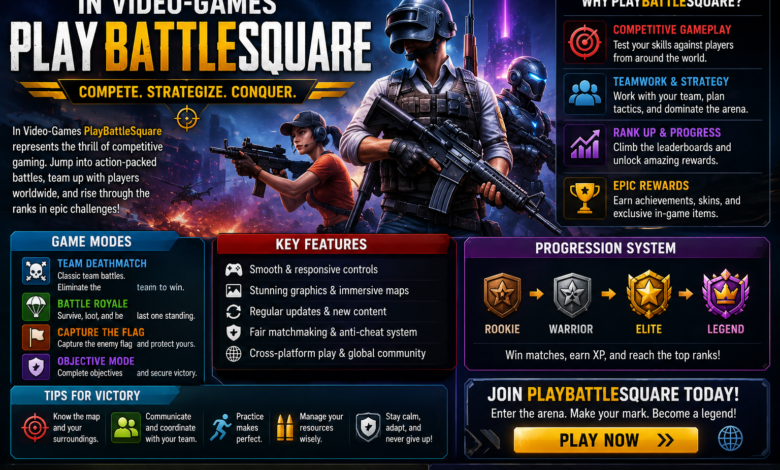
PlayBattleSquare can be viewed as a concept that emphasizes competitive gameplay, strategic thinking, and player engagement.
In battle-focused gaming environments, players typically:
- Complete objectives
- Defeat opponents
- Earn rewards
- Improve rankings
- Unlock achievements
The appeal comes from the combination of skill development, competition, and progression.
Many gamers enjoy these experiences because each match offers unique challenges and outcomes.
Why Battle-Based Games Remain Popular
Battle-oriented games consistently rank among the most-played titles worldwide.
Several factors explain their success.
Skill Development
Players improve through practice and experience.
Replayability
Every match feels different from the previous one.
Community Interaction
Multiplayer gaming encourages communication and teamwork.
Progression Systems
Rewards motivate players to continue improving.
These elements help maintain long-term player engagement.
The Importance of Strategy
Strategy plays a major role in competitive gaming.
Successful players often focus on:
Resource Management
Using available tools effectively.
Positioning
Choosing advantageous locations during matches.
Team Coordination
Working together to achieve objectives.
Adaptability
Adjusting tactics based on changing circumstances.
Strategic thinking often separates experienced players from beginners.
Multiplayer Gaming and Teamwork
Modern battle-focused games frequently emphasize cooperation.
Players may form teams to:
- Complete missions
- Capture objectives
- Defend territories
- Support teammates
Strong teamwork often leads to better results and more enjoyable gameplay experiences.
Many players value the friendships and connections formed through cooperative gaming.
Character Progression Systems
Progression mechanics are important in maintaining player motivation.
Common progression features include:
Experience Points
Players gain experience through participation.
Leveling Systems
Higher levels unlock new opportunities.
Cosmetic Rewards
Customization options showcase achievements.
Achievement Tracking
Milestones provide additional goals.
These systems encourage players to remain active over time.
Competitive Rankings
Ranking systems help measure player performance.
Benefits include:
Clear Goals
Players work toward higher ranks.
Balanced Matches
Skill-based matchmaking improves fairness.
Personal Growth
Progress becomes easy to track.
Community Recognition
High rankings often earn respect within gaming communities.
Competitive ladders contribute significantly to long-term engagement.
The Growth of Esports
Esports has transformed competitive gaming into a global phenomenon.
Professional players now compete in events watched by millions of fans worldwide.
Esports includes:
- International tournaments
- Professional teams
- Sponsorship opportunities
- Livestream broadcasts
- Community events
The rise of esports demonstrates the popularity of battle-focused gaming experiences.
Gaming Communities and Social Interaction
Communities play a vital role in modern gaming.
Players participate in:
Forums
Discussions about strategies and updates.
Social Media
Sharing gameplay highlights and achievements.
Online Groups
Organizing teams and events.
Streaming Platforms
Watching competitive matches and tutorials.
These interactions strengthen the overall gaming experience.
Why Players Enjoy Competition
Competition provides unique psychological rewards.
Players often enjoy:
- Improving skills
- Overcoming challenges
- Achieving goals
- Earning recognition
- Testing abilities against others
Healthy competition motivates players to continue learning and improving.
The Role of Updates in Competitive Games
Successful multiplayer games receive regular updates.
These updates may include:
New Content
Fresh challenges and experiences.
Balance Adjustments
Ensuring fair competition.
Bug Fixes
Improving overall performance.
Seasonal Events
Offering limited-time rewards.
Regular updates help maintain player interest and engagement.
Future Trends in Competitive Gaming
Several emerging technologies are expected to influence battle-focused gaming experiences.
Artificial Intelligence
AI may improve matchmaking systems.
Cloud Gaming
Expanded accessibility for players worldwide.
Virtual Reality
More immersive competitive experiences.
Enhanced Social Features
Stronger community integration and interaction.
These innovations could significantly shape the future of gaming.
Benefits of Competitive Gaming
Participating in competitive gaming can provide several benefits.
Players often develop:
- Problem-solving skills
- Strategic thinking
- Teamwork abilities
- Communication skills
- Quick decision-making
These skills can be valuable both inside and outside gaming environments.
Why PlayBattleSquare Represents Modern Gaming
The PlayBattleSquare concept reflects many qualities that define today’s gaming industry.
These include:
- Competition
- Community engagement
- Skill development
- Strategic gameplay
- Continuous progression
By combining these elements, battle-focused gaming experiences remain highly attractive to players worldwide.
Conclusion
In Video-Games PlayBattleSquare represents the excitement, challenge, and community-driven nature of competitive gaming. As multiplayer experiences continue evolving, players increasingly seek opportunities to test their skills, improve performance, and connect with fellow gamers.
Through strategic gameplay, progression systems, teamwork, and competitive rankings, battle-focused games provide engaging experiences that keep players returning for more. Whether participating casually or striving for high-level competition, gamers continue embracing the thrill and satisfaction that competitive gaming offers.