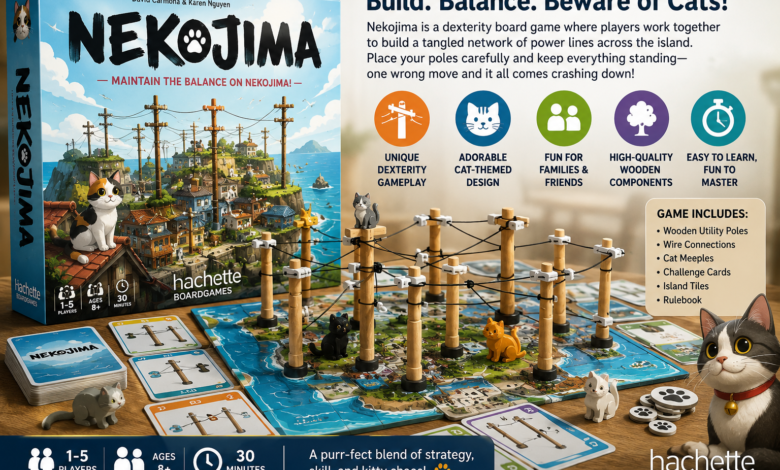
The Hachette Book Group Nekojima Board / Card Game has become a popular choice among families, casual gamers, and board game enthusiasts looking for a unique tabletop experience. Combining dexterity, strategy, and adorable cat-themed artwork, Nekojima offers players a fun challenge that is easy to learn yet engaging enough to play repeatedly.
Published and distributed through Hachette’s board game lineup in various markets, Nekojima stands out for its creative gameplay. Instead of relying solely on luck, players must carefully balance wooden poles, connect electrical wires, and ensure that curious cats don’t cause everything to collapse. This combination of precision and planning makes every game exciting from beginning to end.
Whether you’re hosting a family game night, introducing friends to modern board games, or searching for a gift for a tabletop fan, this guide explains everything you need to know about the Hachette Book Group Nekojima Board / Card Game.
What Is Nekojima?
Nekojima is a tabletop dexterity game in which players work with wooden components to build an increasingly complex network of utility poles connected by wires.
The setting is inspired by a fictional island filled with playful cats. As players add more poles and cables, they must prevent the growing structure from collapsing while following placement rules.
Although simple to understand, the game becomes increasingly challenging as the tower grows taller and more unstable.
How the Game Works
Each turn requires players to place new utility poles onto the playing area while respecting the game’s connection rules.
Players must:
- Draw a challenge or placement requirement.
- Carefully position wooden poles.
- Connect poles using elastic or string wires.
- Avoid touching existing structures unnecessarily.
- Prevent the entire construction from falling.
As the game progresses, each new placement becomes more difficult, creating suspense and excitement for everyone at the table.
Components Included
A typical Nekojima game includes several high-quality components.
These often include:
- Wooden utility poles
- Connecting wires or cords
- Cat-themed pieces
- Placement markers
- Rulebook
- Storage components
The wooden pieces contribute to both durability and an attractive tabletop presentation.
Why Players Enjoy Nekojima
One reason for the game’s popularity is that every match feels different.
Players appreciate:
- Easy-to-learn rules
- Beautiful wooden components
- Family-friendly gameplay
- Exciting balancing mechanics
- Fast play sessions
- High replay value
Even experienced players encounter new challenges because every tower develops differently.
Skill and Strategy
Although Nekojima is primarily a dexterity game, thoughtful planning also plays an important role.
Successful players often:
Plan Ahead
Looking several moves ahead helps identify safer placement options.
Control Balance
Weight distribution becomes increasingly important as the structure grows.
Stay Patient
Rushing placements usually leads to mistakes.
Observe the Tower
Small movements can affect the entire structure.
Careful observation often determines victory.
Family-Friendly Entertainment
Nekojima is suitable for players of different ages because its basic mechanics are simple while remaining enjoyable for adults.
Families enjoy:
- Cooperative laughter
- Friendly competition
- Quick setup
- Minimal learning curve
- Interactive gameplay
This combination makes it an excellent choice for family game nights.
Educational Benefits
Besides entertainment, Nekojima helps develop several useful skills.
Players practice:
- Hand-eye coordination
- Fine motor control
- Patience
- Problem-solving
- Spatial awareness
- Concentration
These educational elements make the game appealing for both homes and classrooms.
Game Night Tips
To maximize enjoyment:
- Play on a stable table.
- Ensure adequate lighting.
- Keep distractions to a minimum.
- Handle pieces gently.
- Follow placement rules carefully.
- Encourage friendly competition.
These simple habits improve the overall experience.
Why Dexterity Games Remain Popular
Dexterity games have become increasingly popular because they combine physical skill with strategic thinking.
Unlike games driven entirely by cards or dice, dexterity games require players to remain calm under pressure while demonstrating precision and careful planning.
This balance creates memorable moments that players often remember long after the game ends.
Who Should Buy Nekojima?
The game is ideal for:
- Families
- Casual gamers
- Board game collectors
- Party game fans
- Teachers
- Gift shoppers
- Cat lovers
Its broad appeal makes it suitable for many different occasions.
Frequently Asked Questions
Is Nekojima a board game or a card game?
Nekojima is primarily a dexterity board game that uses physical components rather than traditional card-based gameplay.
Is it difficult to learn?
No. Most players understand the basic rules within a few minutes.
Can children play?
Yes. Older children can enjoy the game with adult supervision, although recommended ages should always follow the manufacturer’s guidelines.
How long does a game last?
Most sessions are relatively short, making it easy to play multiple rounds during one game night.
Does luck determine the winner?
Skill plays a major role because careful placement and balance are essential for success.
Final Thoughts
The Hachette Book Group Nekojima Board / Card Game delivers an enjoyable blend of dexterity, strategy, and family-friendly entertainment. Its charming cat-themed design, high-quality wooden components, and engaging balancing mechanics make it an excellent addition to any board game collection.
Whether you’re introducing modern tabletop games to beginners or looking for a fresh challenge for experienced players, Nekojima offers a memorable experience that rewards patience, precision, and careful planning. With its attractive presentation and high replay value, it continues to earn recognition as one of the most entertaining dexterity games available for family game nights and casual gatherings.